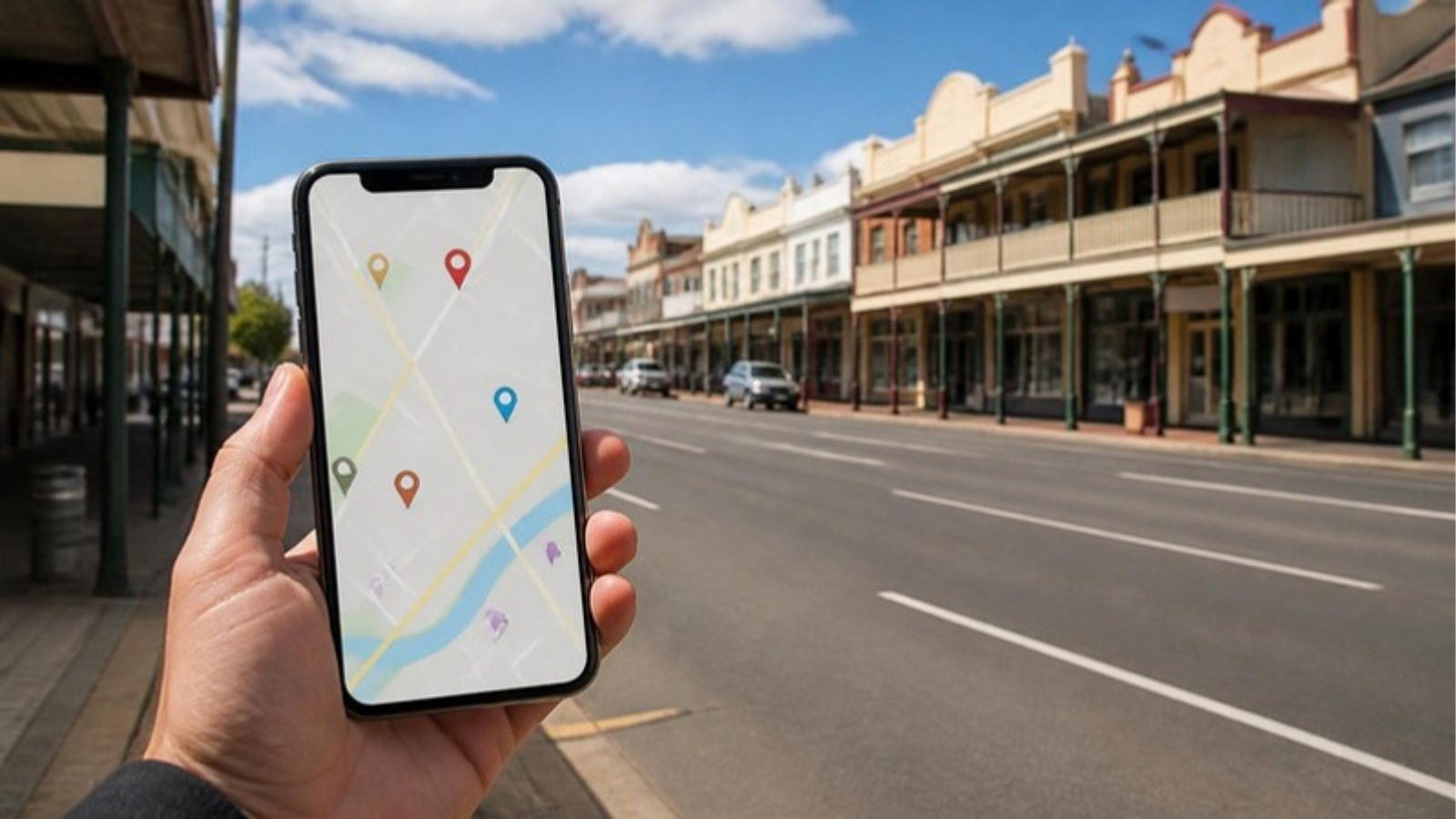
When someone in Tamworth searches "electrician near me" or "physio Gunnedah", Google has to decide which local businesses to show. Local SEO is everything you do to make your business one of them.
The good news for regional businesses is that you're not competing with the whole country. You're competing with the handful of other businesses in your area that do what you do. That's a fight you can win.
How Google decides who shows up locally
Google looks at three things for local searches:
- Relevance: does your business match what the person searched for?
- Distance: how close are you to the person searching, or the town they named?
- Prominence: how well known and trusted does your business look? Reviews, links from other websites and how well your own site is set up all feed into this.
You can't move your shop closer to every customer. But you can do a lot about relevance and prominence.
1. Get your Google Business Profile right
That box with the map and the three businesses listed under it is called the local pack, and for a lot of searches it sits above everything else. The listings in it come from Google Business Profile, which is free.
Make sure yours has:
- Your exact business name, address and phone number, matching your website
- The right primary category (be specific: "Plumber", not "Contractor")
- Your real opening hours, including public holidays
- Photos of your team, your premises and your work
- A list of your services with a sentence or two on each
Then keep it active. A post every week or two and fresh photos tell Google the business is alive and well.
2. Collect reviews, and keep collecting them
Reviews are one of the strongest local signals, and they're the first thing a new customer reads. The businesses that win here aren't the ones with a burst of 30 reviews in one month. They're the ones that get one or two every week, year after year, because asking is just part of how they finish a job. We'll cover how to do that without it feeling awkward in a future post.
3. Make your website say where you work
This one is often missed. If your website never mentions the towns you service, Google has to guess. Your site should clearly say:
- Your town and region in page titles and headings where it reads naturally
- The areas you travel to
- Your full address and phone number on every page, usually in the footer
If you service several towns, a dedicated page for each one can help, but only if each page says something true and useful about that place. Copying the same page and swapping the town name is something Google spots, and it can do more harm than good. Our own Tamworth page talks about the local businesses we've worked with and where our office is, rather than repeating the same words as every other page.
4. Get the basics of your website right
Local SEO sits on top of your website, so the foundations matter:
- A separate page for each main service, so Google knows exactly what you offer
- Clear, specific page titles and descriptions
- A site that loads quickly and works properly on a phone
- Structured data (behind-the-scenes code) that tells Google your business details
If any of that sounds like a foreign language, our jargon buster explains the terms in plain English.
5. Get mentioned around town
Links and mentions from other local websites help Google see you as part of the community. Think local chamber of commerce, industry associations, sponsorships of the footy club, local news stories and supplier directories. These carry more weight than any number of random directory listings you'd pay for.
What doesn't work
- Fake reviews, or reviews from family and staff. They're against Google's rules and the ACCC's.
- Stuffing your town name into every sentence.
- Buying links from overseas link sellers.
- Setting up a fake address in a town you don't actually work from.
How long does it take?
A well set up Business Profile and a few new reviews can make a difference within weeks. Website changes usually take a few months to fully show up. Local SEO is less about a single big push and more about doing the right things consistently.
We've been helping regional businesses get found for over ten years. If you'd like to know where your business stands, take a look at our SEO services or get in touch for a chat.